Leader Psychology
The president of Syria, Bashar al-Assad, plays a major role in the ongoing conflict in Syria. We often tend to look through the eyes of the victims of the war or the opposition, but what goes on the mind of the leader of Syria?
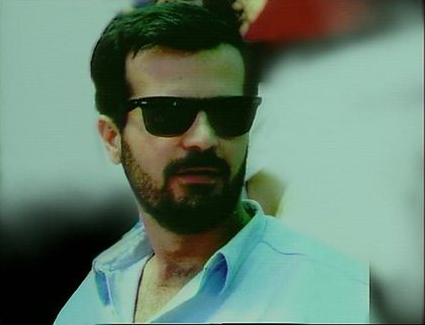 Bashar’s brother, Bassel al-Assad (the man in the left picture) was a very popular man in Syria. A lot of Syrians liked him and everyone was certain that he would be the next president of Syria. Unlike his older brother, Bashar was seen as a weak, shy and hesitant child and later it became clear that he wasn’t really interested in politics. He was seen as the odd one in the family and definitely not as a strong ruler. This "childhood trauma" of his older brother being popular and his image as a weak child, might have left mental scars. However, Bashar was quite smart and his education went pretty well. He went to school and finally finished his residency in ophthalmology. During his study he got attracted to the Western style of life and thus decided to travel to England for his study. There he learned that he loved the Western style of living and wondered why Syria hadn't evolved in a similar way. Then one day something unexpected happened. Bassel, who was almost certainly going to be the next president of Syria, died in 1994 in a car accident. His father strangely decided that Bashar would become the next Syrian president instead of his younger brother, who actually has more genes of a good leader. After two years of training and education, Bashar had grown into a more powerful and confident man. With the Western life style in his head, he wanted reform to Syria and make it more modernized. To fulfil this, he needed to adopt neo-liberal and capitalist policies. This lead to resistance from his father's old guard. Then Bashar made a realist move by using his power to retire some of the old guard.

With this action, he manipulated the situation to persue his self-interest. Also the new neo-liberal and capitalist policies caused an extreme inequality between rich and poor. Mainly the population suffered. He indeed changed a lot in Syria in several years with an attempt to modernize it. However, many people were not happy and disagreed with those changes. Assad's behaviour, which changed a lot since the death of his brother, and his "childhood trauma" have probably been a big factor in the start of the Syrian Civil War.